
Your new skates have arrived? Don't just put them on and go! When your new skates arrive, we recommend not simply...
Contact us +33466218691
clic-n-roll@hotmail.fr
clic-n-roll@hotmail.fr
Latest posts
-
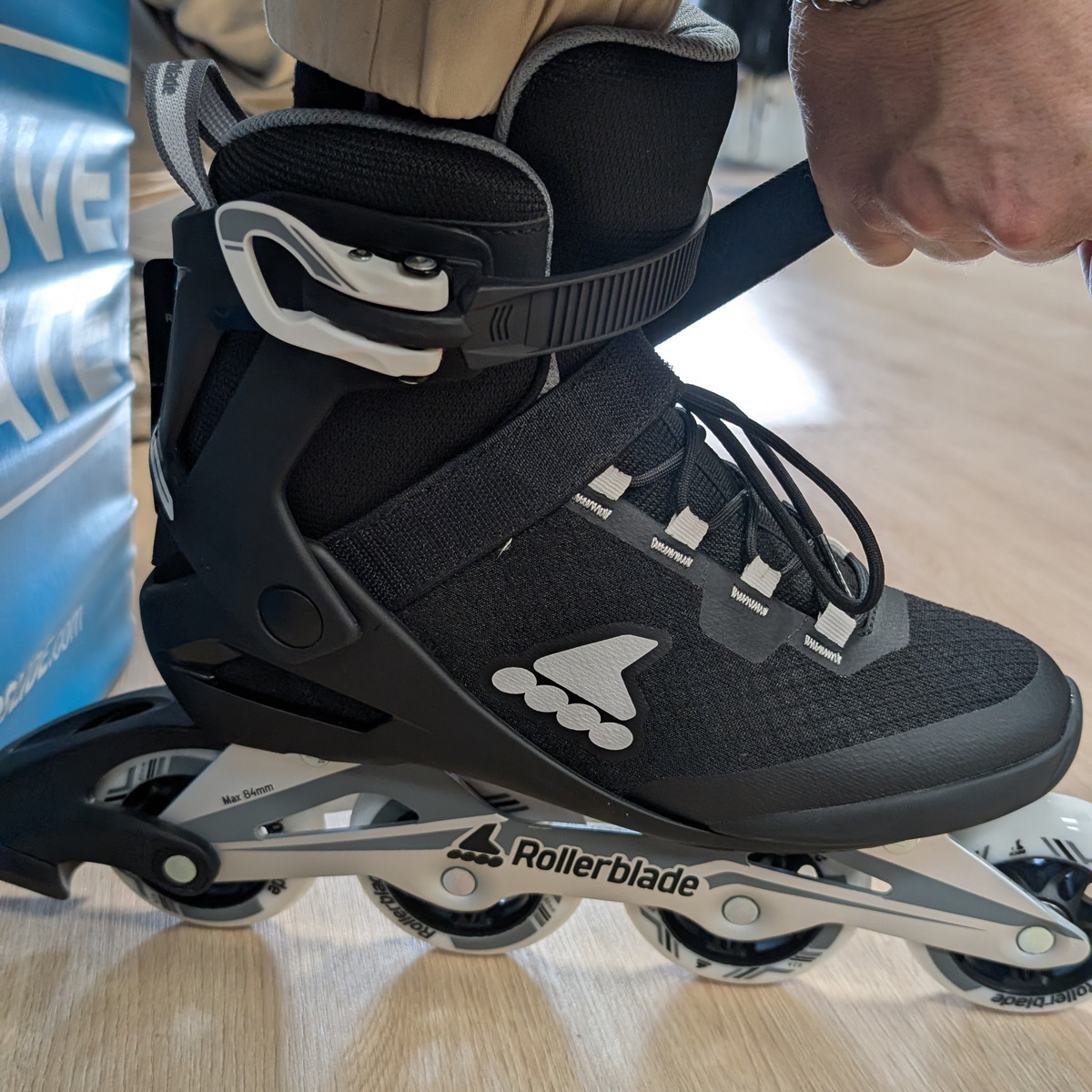 How to Properly Put on Your New SkatesRead more
 -
 How to Apply Skateboard Grip Tape – Step-by-Step GuideRead more
Applying grip tape to a skateboard is easy, but getting a clean and professional result takes a little precision....
-
 UFS+: What You Need to KnowRead more
For more than 20 years, the UFS system has established itself as a key standard in aggressive inline skating, thanks...
-
 Surfskate Trucks Explained: How to Choose the Right OneRead more
The truck is what makes a surfskate different from a regular skateboard. Carver C7, CX and C5, YOW Meraki,...
-
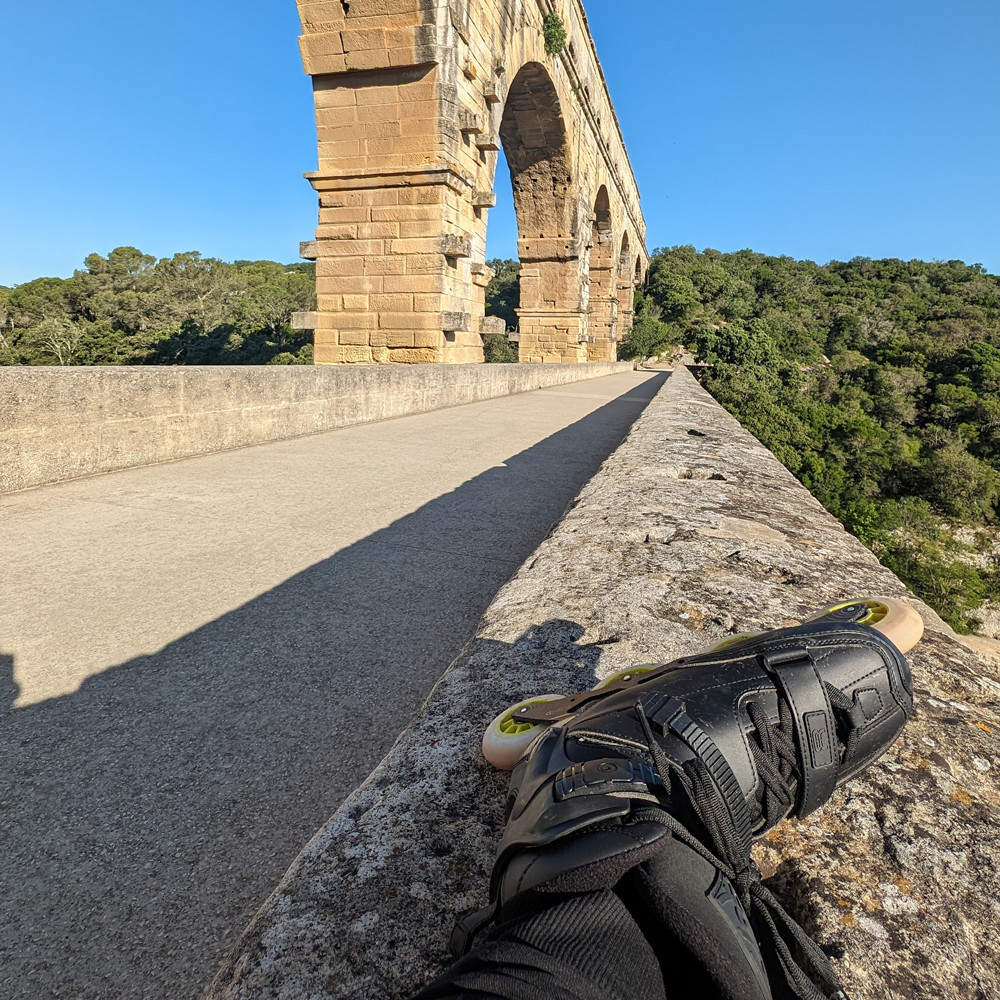 Uzès – Pont du Gard Greenway on Inline Skates: 25 km Through the GardRead more
Looking for an easy inline skating route in southern France with an incredible finish? Discover the Uzès – Pont du...
-
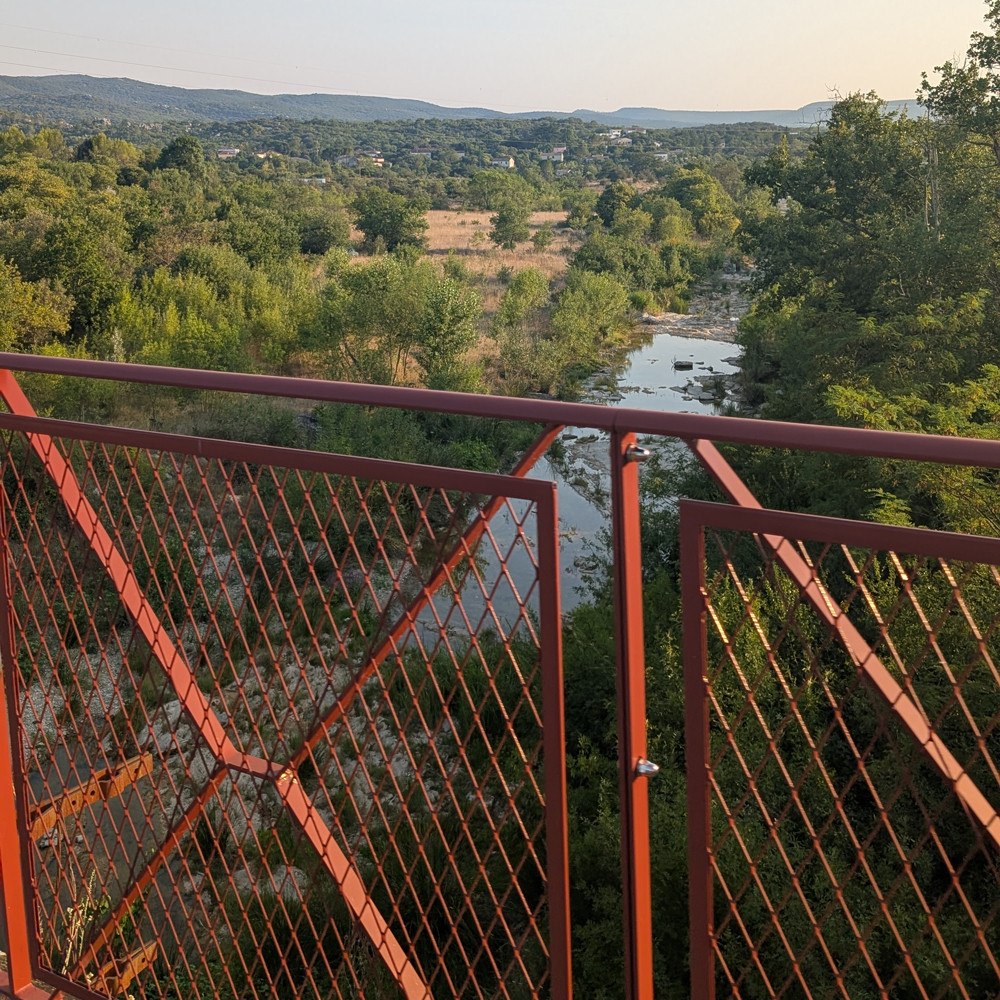 Quissac – Ganges Greenway on Inline Skates: 55 km Through the CévennesRead more
Looking for a great inline skating adventure in the south of France? Discover the Quissac to Ganges Greenway, built...
-
 Roller Greenway - Vauvert to the Carbonnière Tower (30)Read more
This rollerblading greenway runs between Vauvert and Aigues-Mortes, more precisely to the Carbonnière Tower in...
-
 Roller Greenway - La Vaunage (30)Read more
The Vaunage Greenway is well known in the Gard department (30). Ideal for roller skating, this greenway is one of the...
-
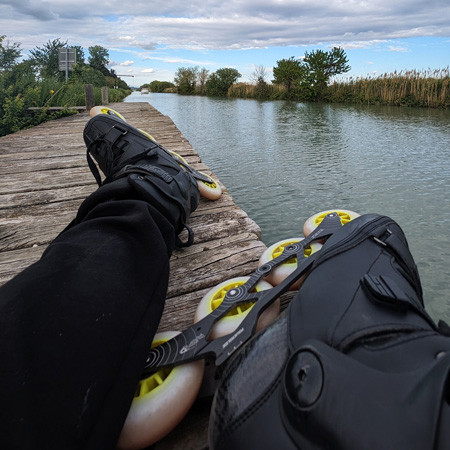 Bellegarde to Beaucaire Roller Trail – Gard (30)Read more
Discover the roller skating greenway between Bellegarde and Beaucaire, a section of the ViaRhôna running alongside...
-
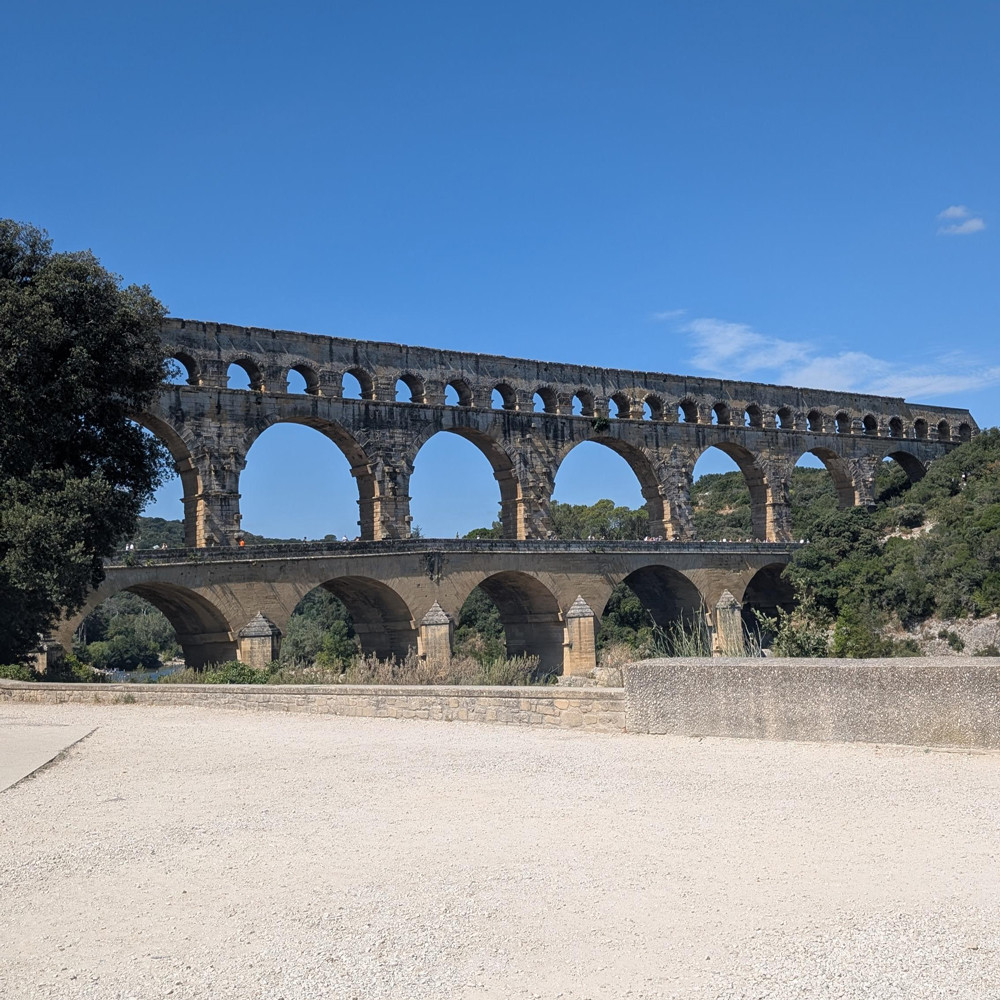 Beaucaire to Uzès Roller Trail – Via the Pont du Gard (30)Read more
Discover the greenway between Beaucaire and Uzès, a beautiful roller skating route through the Gard region of...
Blog categories
Search in blog
Archived posts
Inline Skate Frames: How to Choose the Right Setup
Freestyle Frames: The 3 Main Setups
Aggressive freestyle frames generally use the UFS (Universal Frame System) standard.
This mounting system allows a UFS frame to be installed on a compatible UFS boot regardless of brand or size.
That means you can mix and match UFS boots and frames from different brands.
1. FLAT Setup
A FLAT setup uses four wheels of the same diameter, with all four wheels touching the ground.
This configuration provides an excellent combination of speed and maneuverability, making it particularly popular for skatepark skating.
The H-block also sits relatively close to the coping, making it easy to lock into grinds.
Some FLAT frames can also be configured as antirocker.
2. ANTIROCKER Setup
An ANTIROCKER setup uses larger wheels at the front and rear with two smaller wheels in the middle.
These smaller wheels are often made from plastic and help reduce wheel bite and unwanted contact during grinds.
The additional clearance around the H-block also makes grinding easier.
It's a highly versatile setup and remains especially popular for street skating.
3. FREESTYLE Setup
A FREESTYLE setup uses only two outer wheels, one at the front and one at the rear.
The large central area is occupied by a large H-block, specifically designed for grinding.
This configuration is strongly focused on street skating, providing a large grinding surface and plenty of freedom on different spots.
Bonus: BIG WHEEL Frames
Over the last few years, manufacturers have developed UFS Big Wheel frames.
These frames allow aggressive skate boots to be converted into a Big Wheel setup, making them suitable for cruising, freeride or simply adding more speed.
Aluminum and nylon frames are available in 5-, 4- and 3-wheel configurations.
5 Wheels: Wizard-Style Skating
5-wheel frames are commonly associated with Wizard-style skating.
These frames are often slightly rockered to make fluid movements, transitions and front or rear wheelings easier.
4 Wheels: Versatility and Speed
4-wheel UFS frames are commonly available for 80, 84 or 90mm wheels.
The basic rule is simple:
Larger wheels provide more speed.
Smaller wheels, on the other hand, offer more maneuverability and control.
3 Wheels: Speed and Comfort
3-wheel frames commonly use 100, 110 or 125mm wheels.
Again, larger wheels mean more speed.
Large wheels also provide increased comfort when skating over rough or uneven surfaces.
And when combined with a short frame, a 3-wheel setup can still deliver excellent maneuverability.
Frames for Fitness Skating
For fitness skating, frames are generally made from plastic or aluminum.
Aluminum provides increased stiffness and generally offers better long-term durability.
There are two main types of aluminum frames:
- molded or stamped frames;
- extruded frames, which are generally stiffer and stronger thanks to their manufacturing process.
More advanced frames can also be made from magnesium or carbon, offering excellent stiffness while significantly reducing weight.
The maximum wheel diameter supported depends on the frame model and is usually specified by the manufacturer.
Hi-Low Frames: Hockey and Speed
Some disciplines use Hi-Low frames, where the wheels have different diameters along the same frame.
This setup places the skater slightly forward and encourages a more aggressive stance, helping improve acceleration and responsiveness.
Examples include:
80 / 76 / 72 / 72 mm
or:
110 / 110 / 100 / 100 mm
and:
110 / 110 / 100 / 110 mm
The exact configuration depends on the frame model.
Freeskate Frames: Short and Highly Maneuverable
In freeskating, frames are generally shorter, with the wheels positioned close together.
The goal is simple: maximum maneuverability and responsiveness.
For slalom skating, the traditional "banana" setup uses slightly smaller wheels at the front and rear than in the middle.
For example:
76 / 80 / 80 / 76 mm
This creates a rocker effect that makes quick direction changes and technical movements easier.
Rockered Frames
There are also rockered frames.
In this configuration, all the wheels can have the same diameter, but the axles for the middle wheels are positioned differently from those of the outer wheels.
The result is similar to a banana setup: increased agility and maneuverability while keeping the same wheel size throughout the setup.
Why Choose a 3-Wheel Frame?
3-wheel frames became increasingly popular from the mid-2010s in freeskate, fitness and even speed skating.
They combine speed, comfort and maneuverability, especially when paired with a relatively short frame.
A good example is a 3x110mm setup. It can remain very compact while offering more speed than a 4x90mm setup.
In speed skating and speed slalom, the performance of modern 3-wheel setups can be seriously impressive.
⚠️ Warning: once you try 3 wheels, you might not want to go back!
What About Mounting Spacing?
For frames other than UFS aggressive frames, compatibility mainly depends on the mounting spacing of the boot.
It is therefore essential to measure your boot's mounting spacing before ordering a new frame.
Two of the most common mounting standards are:
- 165 mm
- 195 mm
The mounting specifications are listed on each frame's product page.
? Always check your boot's mounting spacing before ordering.
What Is the TRINITY System?
TRINITY is a 3-point mounting system developed by the POWERSLIDE group.
⚠️ Important: Trinity frames are only compatible with boots equipped with the Trinity mounting system.
The design uses one mounting point at the heel and two at the front of the foot.
This architecture provides several advantages:
- stronger boot-to-frame connection;
- improved power transfer;
- greater precision when pushing;
- better ability to load the inside and outside edges;
- lower center of gravity.
The two front mounting points allow the front wheel axle to sit closer to the underside of the boot, helping reduce the distance between the foot and the ground.
Which Frame Should You Choose?
Ultimately, it depends on how you skate:
Aggressive street: FREESTYLE or ANTIROCKER
Skatepark: FLAT
Fast aggressive / Big Wheel: UFS BIG WHEELS
Freeskate: short and responsive frame
Slalom: ROCKERED or banana setup
Fitness: aluminum or composite depending on your performance needs
Hockey / speed: HI-LOW
Fast cruising / distance: 3- or 4-wheel Big Wheel setup
The most important thing is to check boot, mounting system, frame and wheel compatibility before building your setup.
Once you've got that part figured out, it's time to choose your setup, hit the streets and send it!
Find All our Frames, with all mounting just HERE !
Posted in:
Inline Skates
Related posts
-
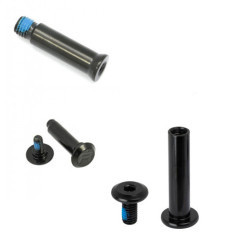 Which Wheel Axle Fits Your FR Skates Frame?
Not sure which wheel axle fits your FR Skates plate? With several axle references available, finding the right one...Read more
Which Wheel Axle Fits Your FR Skates Frame?
Not sure which wheel axle fits your FR Skates plate? With several axle references available, finding the right one...Read more -
 Rollerblade Blank TB64 Review: Speed, Maneuverability & 4x64mm Setup
Looking for a flat setup that combines speed, maneuverability and street performance? We put the Rollerblade Blank...Read more
Rollerblade Blank TB64 Review: Speed, Maneuverability & 4x64mm Setup
Looking for a flat setup that combines speed, maneuverability and street performance? We put the Rollerblade Blank...Read more -
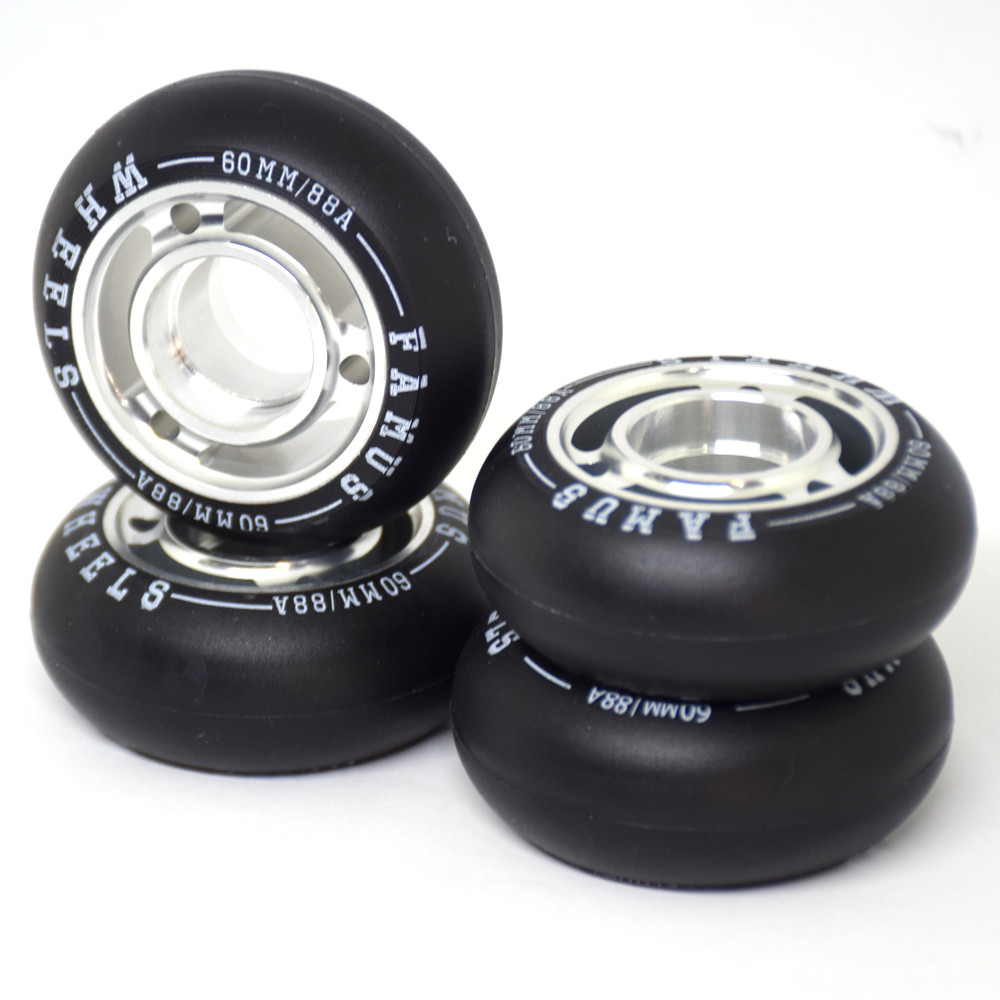 How to Install and Remove Bearings from FAMUS Furious Wheels
Need to install or remove inline skate bearings from FAMUS Furious wheels? In this tutorial, Bolton from Clic-N-Roll...Read more
How to Install and Remove Bearings from FAMUS Furious Wheels
Need to install or remove inline skate bearings from FAMUS Furious wheels? In this tutorial, Bolton from Clic-N-Roll...Read more -
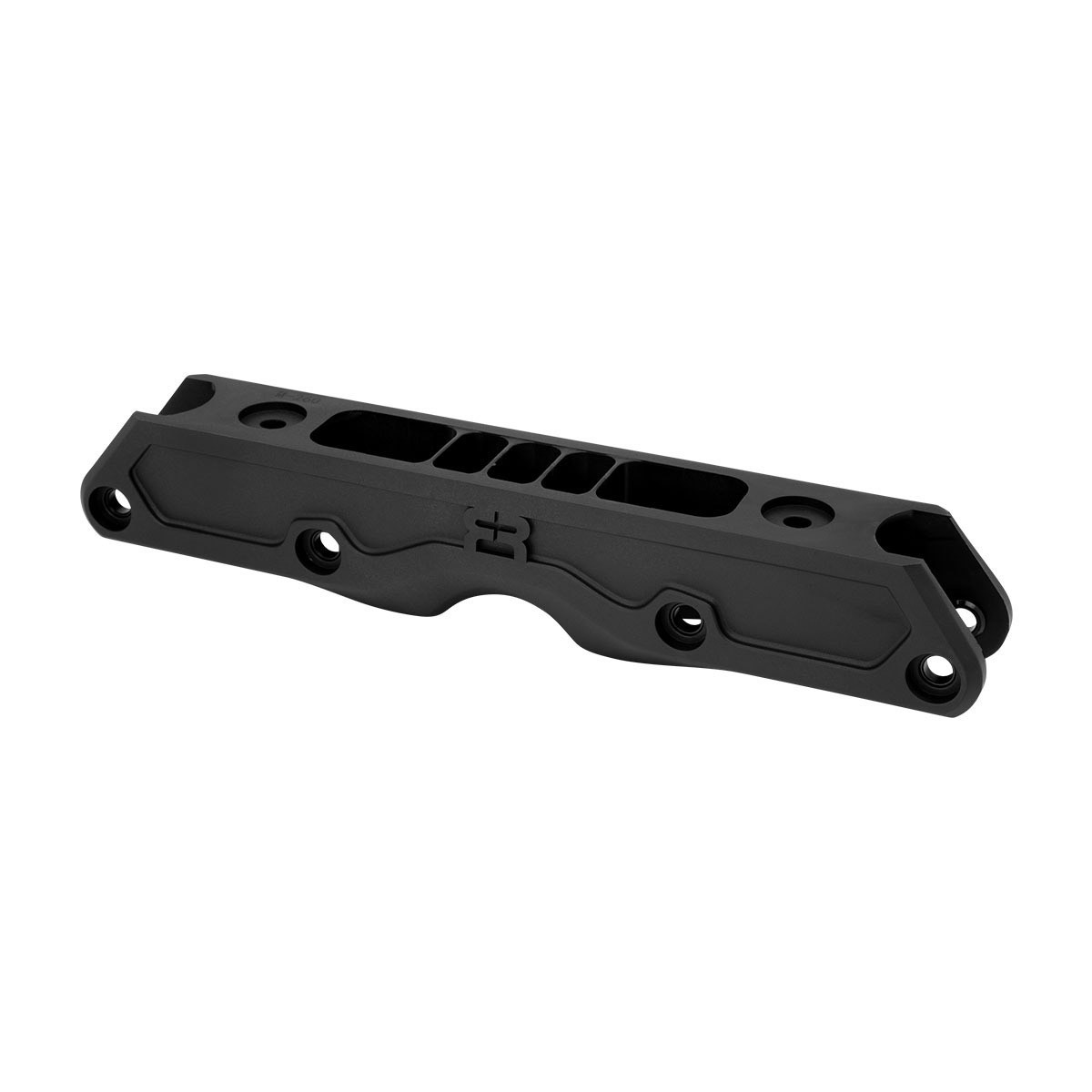 FR SKATES Street Frame Review: A Game-Changing UFS Flat Frame?
FR SKATES has entered the UFS aggressive skating world with its first Street frame, developed in collaboration with...Read more
FR SKATES Street Frame Review: A Game-Changing UFS Flat Frame?
FR SKATES has entered the UFS aggressive skating world with its first Street frame, developed in collaboration with...Read more -
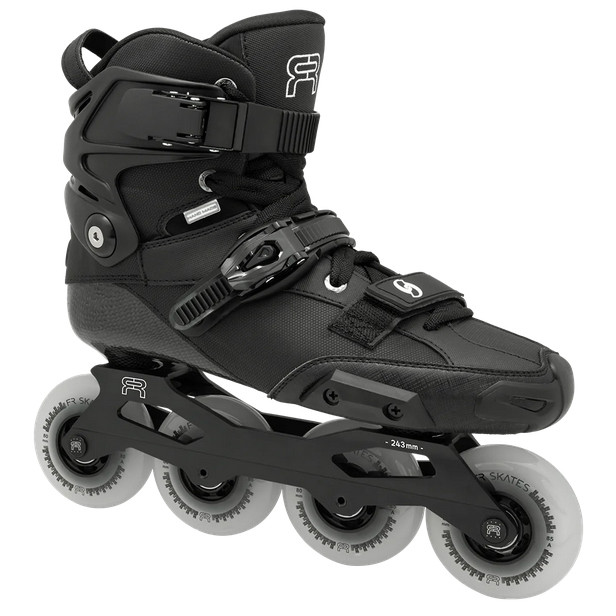 FR SKATES Spin: Technical Information & Size Guide
Looking for all the technical information about the FR SKATES Spin inline skates? Clic-N-Roll brings you this...Read more
FR SKATES Spin: Technical Information & Size Guide
Looking for all the technical information about the FR SKATES Spin inline skates? Clic-N-Roll brings you this...Read more
Leave a comment